Longevity
Why Strength Changes the Conversation About Aging
I've been interested in strength for much longer than I've been interested in longevity. Now I'm increasingly convinced the two conversations belong together.
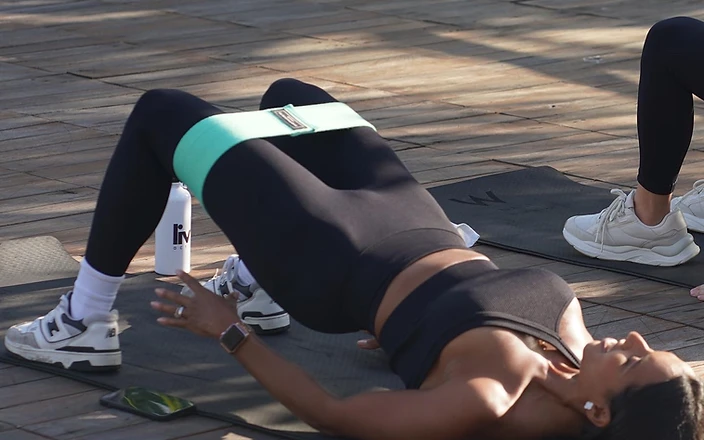
For most of my life, I understood training as a kind of subtraction. Smaller, leaner, lighter, more disciplined — the vocabulary was almost entirely about removing things. Take away weight, take away softness, take away the parts of yourself that didn't fit the picture.
Then I started reading about muscle, and the framing collapsed.
Muscle is not a cosmetic
Muscle is metabolic currency. It is how we clear glucose, stay insulin-sensitive, protect joints, and keep moving without pain. The data on resistance training and aging is some of the clearest I've read in any field — and some of the most consistently ignored by the women it would help most.
For women especially, the loss of muscle and bone after midlife is not a question of appearance. It is the difference between independence and frailty, between a fall you walk away from and a fall you don't. Somewhere along the way we taught women that strength was a masculine goal and smallness was a feminine one. The biology never agreed.
Two conversations that belong in the same room
I've been interested in strength for much longer than I've been interested in longevity. For years I kept those interests in separate rooms. I don't anymore.
The longevity conversation spends enormous energy on what to add — a supplement, a protocol, a test — and what to avoid. It spends remarkably little time on what to build. I'm increasingly convinced that the building part is the part that matters most, and it is the part women hear the least about. You cannot supplement your way out of a body you never built.
What I pay attention to now
- Resistance training, consistently. Not performance. Presence. Showing up and lifting something heavy enough to matter, more days than not.
- Protein, enough. Most women undereat it without realizing, and the number that feels normal is often below what their muscle actually needs.
- Bone and muscle as reserves. Built early, maintained deliberately, protected the way you would protect any other reserve that has to last a lifetime.
The conversation about how women age spends a lot of time on decline. I would rather talk about what there is still time to build — and how much of what we call aging is really the slow, quiet cost of never building it in the first place.